First-Party Data Tactics After Cookie Changes
Practical ways to improve targeting while maintaining user trust.
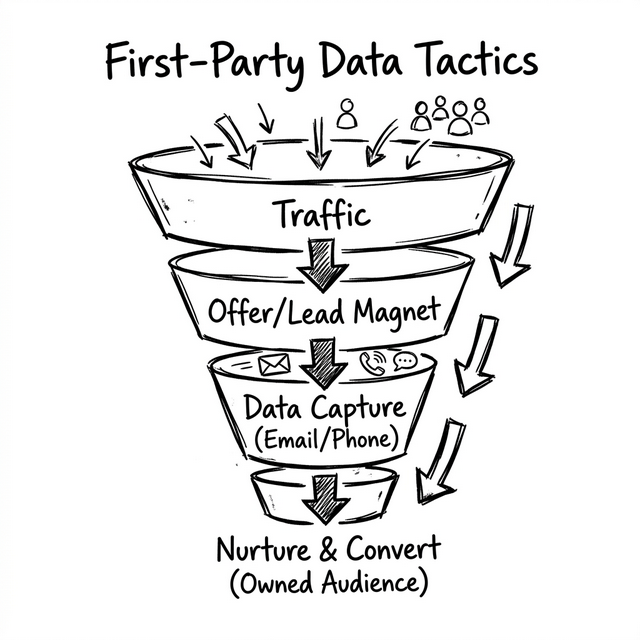
As third-party signal quality declines, first-party data is now the leverage point for paid performance. Collect intent directly through staged forms, preference fields, and micro-conversions tied to buying readiness. Sync clean CRM outcomes back to ad platforms so optimization learns from qualified opportunities, not just top-funnel events. This approach improves audience quality, lowers wasted impressions, and helps creative systems prioritize messages that convert.
For most teams, profitability improves when optimization decisions are based on qualified outcomes, not just click volume. This requires cleaner tracking and tighter CRM feedback. When this discipline is maintained, CPA trends become more predictable and scaling becomes safer. You are no longer guessing which spend is productive.
The fastest improvement loop is weekly: mine search terms, refine exclusions, rotate fatigued creatives, and protect budget for high-intent segments that already convert. Paid growth depends on message-market fit and clean conversion signal, not just bigger budgets. Campaigns scale safely when ad promise, audience intent, and landing-page experience are tightly aligned. If those layers are disconnected, spend rises while lead quality drops.
Start by narrowing to high-intent segments and validating that post-click experience matches pre-click expectation. Search and social campaigns should run on weekly optimization loops. Review term quality, cut waste, rotate fatigued creatives, and protect budget for segments that convert into qualified opportunities. Teams that skip this operating cadence often mistake volatility for progress.
A disciplined loop turns ad performance into a controllable system rather than a series of unpredictable spikes. Attribution quality determines optimization quality. If platform events are noisy or delayed, bidding systems optimize to the wrong outcomes. Integrate downstream qualification signals where possible and validate that tracking reflects real business results, not vanity conversions.