Fixing CLS on Marketing Sites
Why layout shifts silently kill form completion on mobile.
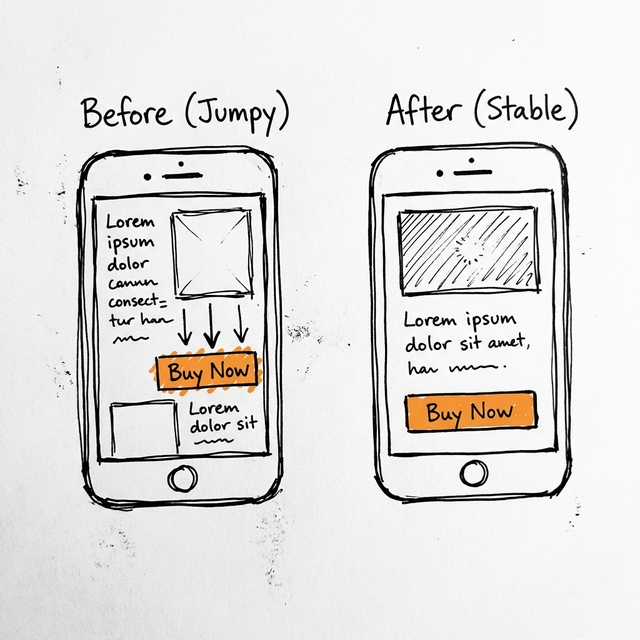
Cumulative Layout Shift quietly destroys conversions because users lose confidence the moment buttons move under their thumb. Common causes are missing image dimensions, delayed font swaps, and components that resize after scripts load. The fix is to reserve media space upfront, stabilize high-intent UI elements, and preload only the font assets used above the fold. On mobile-heavy traffic, even small CLS improvements can lift form completion because the page feels controlled and trustworthy.
This protects business impact while keeping development effort focused. Teams that measure page speed, interaction stability, and error rates in every release usually prevent silent regressions that hurt lead flow over time. Good web development is not only about visual polish. It is about reliable behavior under real traffic and real device constraints.
It is about reliable behavior under real traffic and real device constraints. Web performance and conversion are directly linked. Users decide whether to trust your offer before they read everything, and that decision is influenced by speed, stability, and interface clarity. A technically polished page reduces hesitation and keeps attention focused on the decision path.
This is why performance work should be prioritized on revenue-critical templates first. A robust implementation plan should include explicit budgets for JavaScript, media weight, and third-party scripts. Without budgets, performance decays gradually as marketing tools accumulate. With budgets enforced in CI, regressions are caught before release and teams maintain launch quality over time.
